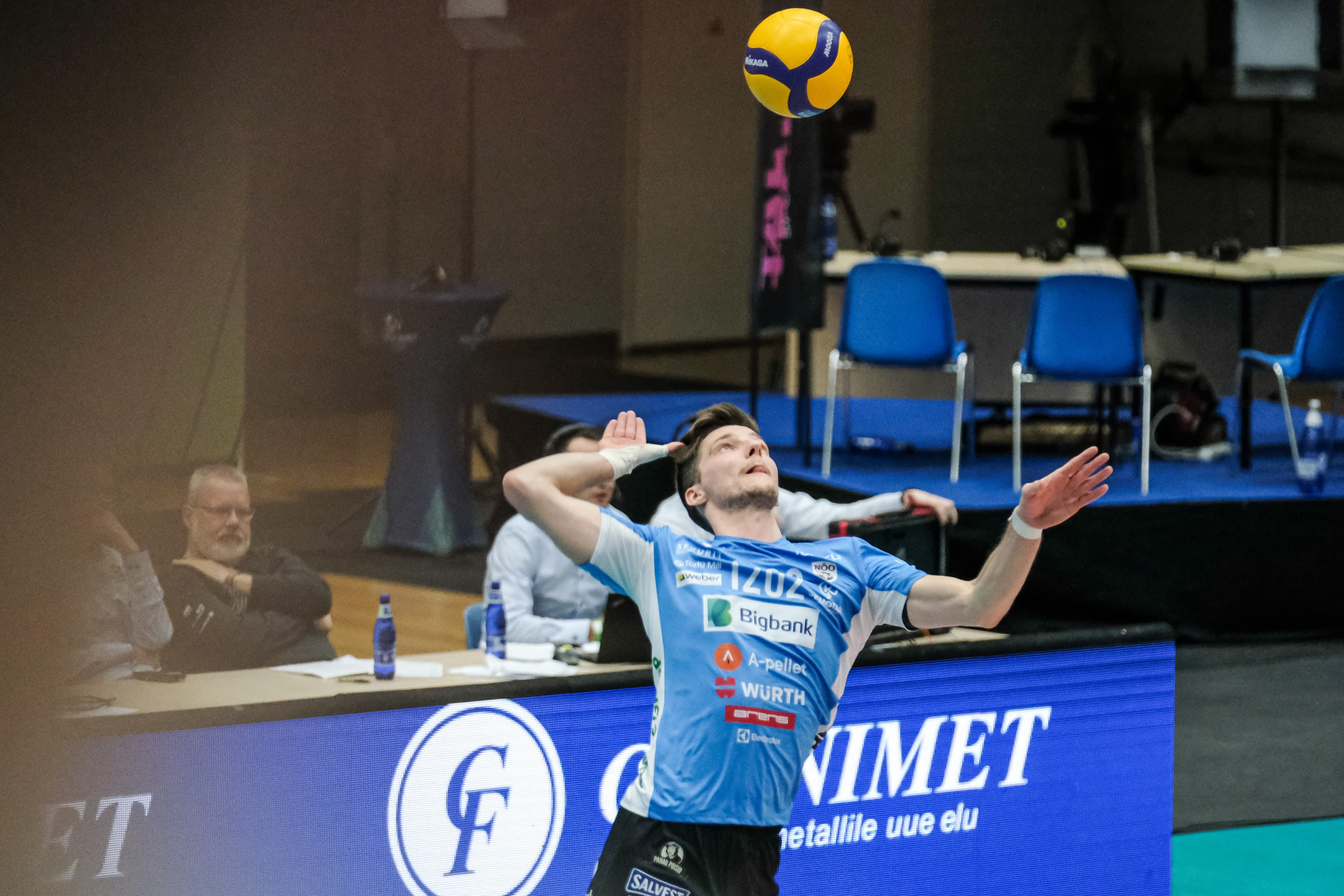
I've been playing volleyball at a professional level since 2014. I've also been running a freelance web development business since 2021. For years I treated these as two separate lives — training in the morning, client work in the afternoon, matches on weekends.
At some point I realized they're the same job. Different uniform, same skills.
Here's what a decade on the court taught me about freelancing.
1. You don't rise to the occasion. You fall to your level of preparation.
In volleyball, nobody plays better in a big match than they trained all season. Under pressure, you don't magically improve — you default to your habits.
Freelancing works exactly the same way. When a client project goes sideways — a deadline moves up, a server breaks the night before launch — you don't suddenly become a better developer. You fall back on your systems: your backups, your checklists, your process. If those are solid, pressure is just noise. If they're not, pressure exposes it.
I stopped hoping projects would go smoothly and started preparing for the ones that wouldn't.
2. Show up when you don't feel like it
Every athlete knows this one. Motivation gets you to maybe 40% of trainings. Discipline covers the rest.
The freelance version: nobody is checking whether you worked today. No coach, no boss, no teammates waiting at the gym. Some days the code doesn't flow and the inbox is full of problems. You work anyway — not heroically, just consistently. A mediocre session still moves the project forward. A skipped one doesn't.
Clients don't hire the most talented freelancer. They hire the one who reliably shows up.
3. Feedback is information, not insult
I've had coaches tell me — loudly, in front of the team — exactly what I did wrong. It stings for about ten seconds. Then you fix it, because that's literally the fastest way to get better.
Early in freelancing, client criticism used to feel personal. "The design doesn't feel right." "This page is confusing." My instinct was to defend the work. Sport trained that out of me. Now I hear feedback as free coaching: the client just told me precisely what to improve, and they didn't even charge me for it.
The freelancers who plateau are usually the ones who argue with feedback. The ones who grow just say "got it" and adjust.
4. You're only as good as your last game — and that's fine
In sport, past wins buy you nothing on match day. You prove yourself again, every game.
Freelancing has the same rhythm. Every project is a new match: new client, new problem, reputation on the line again. This used to feel exhausting. Now I see it as the fairest system there is — you're always one great project away from your best referral, no matter what happened before.
5. Recovery is part of the training plan
The biggest mistake young athletes make is thinking more is always better. Overtraining doesn't make you stronger; it makes you injured. Rest is when the actual adaptation happens.
Freelancers make the identical mistake with work. I've done the 12-hour coding days. The output of hour 11 is usually code I rewrite the next morning. Sport taught me to treat energy like a training load: work hard, recover properly, repeat. It's not softness — it's how you stay in the game for years instead of burning out in two.
6. Trust your teammates — even when your teammate is a client
Volleyball is six people and one ball. You physically cannot win alone. You learn to communicate constantly, cover for each other's mistakes, and trust that the setter puts the ball where they said they would.
A freelance project is a team too: me, the client, sometimes a designer or a copywriter. The projects that fail are almost never technical failures — they're communication failures. Someone assumed instead of asking. Sport made over-communicating a habit: call the ball, say what you're doing, confirm what you heard. It feels excessive until you see how many problems never happen because of it.
The real lesson
People sometimes ask if it's hard balancing professional sport with running a business. Honestly — each one makes me better at the other. The court taught me discipline, pressure tolerance, and teamwork long before my first client. The business taught me strategy and patience I bring back to the game.
If you're a hiring manager or a potential client reading this: this is what you actually get when you work with an athlete. Not just the skills on the CV — the ten years of training underneath them.
Aleksander Eerma is a freelance web developer and professional volleyball player based in Estonia. He builds WordPress and custom web solutions at alexeerma.ee.